
When Should You Change Your Mind?
Separating Conviction From Stubbornness

Before we talk about leadership, let’s play a game.
Imagine this scenario. You’re on a game show.
There are three doors. Doors 1, 2 and 3.
One random door has a $1,000,000.00 cash prize behind it.
Two doors have nothing behind them.
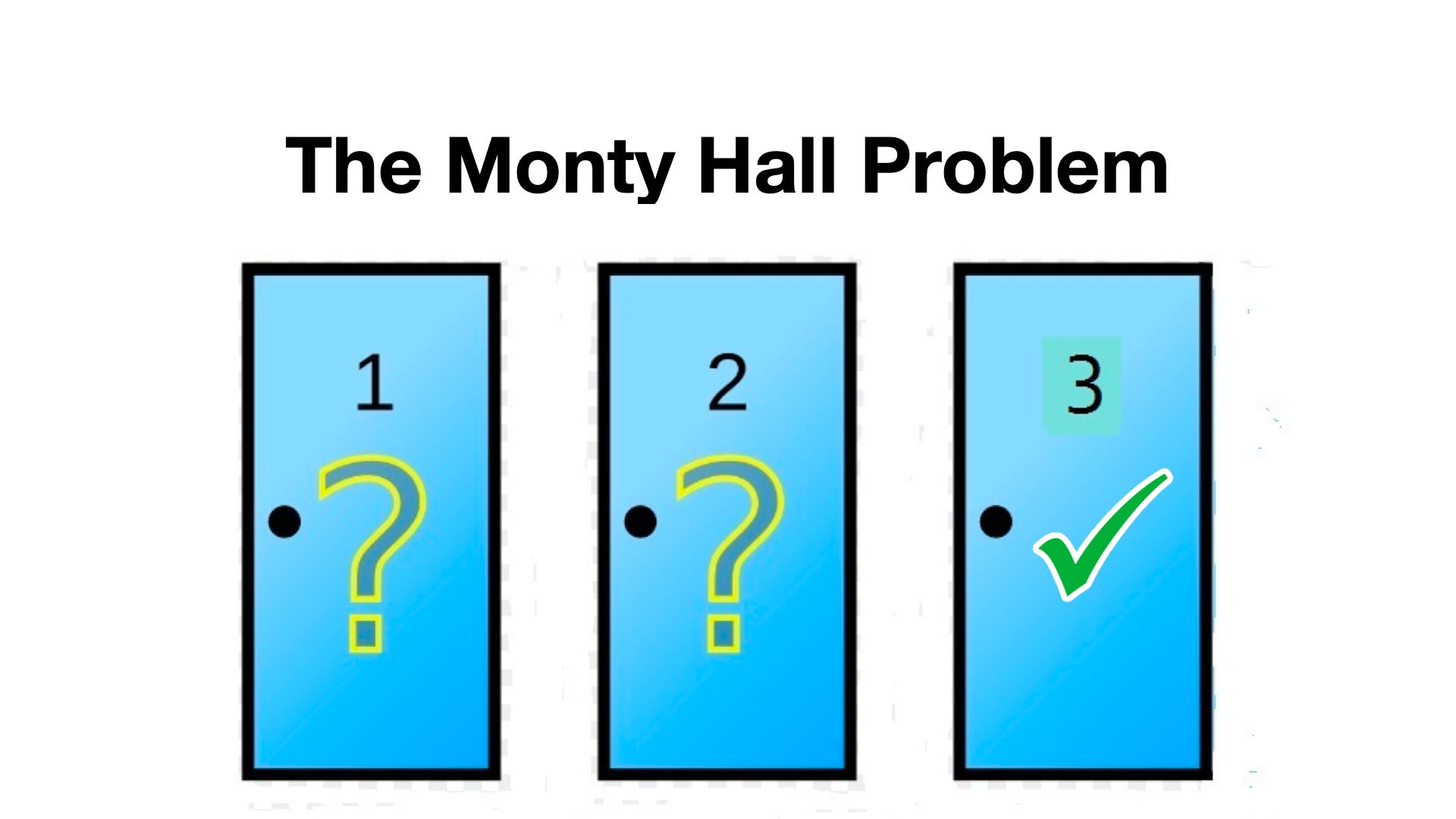
You are asked by the game show host to pick a door to keep whatever is behind it. You may remember a similar show from your childhood hosted by Monty Hall called “Let’s Make a Deal.”
While this game show scenario we’ve concocted is similar to the above video, in this particular game show, after you choose, the Monty Hall then opens one of the remaining doors you didn’t pick and reveals that it is empty. He always reveals one of the two losing doors no matter what door you choose.
Then you are given a choice.
You can stay with your original door.
Or you can switch to the other unopened door.
At first glance, this feels like a coin flip. Two doors remain. One prize. Fifty fifty.
That intuition is wrong.
Why Switching Is the Right Move
The key detail is simple and easy to miss.
The host never reveals the prize. The opened door is guaranteed to be a losing door.
When you made your first pick, you had a one in three chance of being correct. That has not changed. Your original door still carries a 33.3 percent chance of winning.
The remaining unopened door now carries the other 66.7 percent.
Switching doubles your odds.
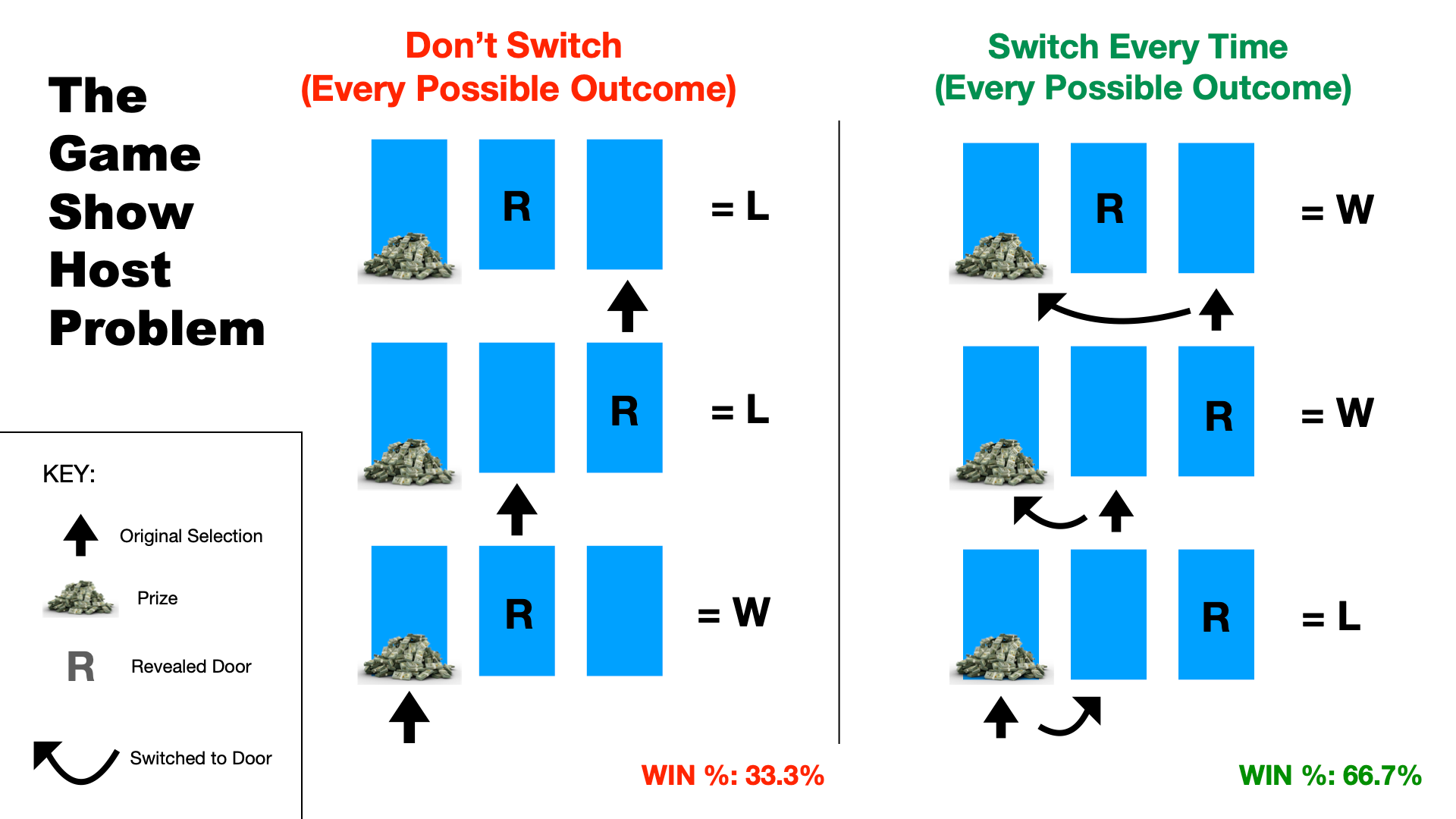
Explanation of the Monty Hall Problem and Why The Decision To Switch Is Right: When you make your first choice, you only have a one-in-three chance of being correct. When the host reveals an empty door, that new information does not improve your original odds, but it concentrates the remaining two-thirds probability onto the other unopened door. Switching is correct because it moves you from a 33.3 percent chance to a 66.7 percent chance of winning.
The attached graphic makes this obvious. On the left side, every possible outcome when you stay with your original choice. You win one time out of three. On the right side, every possible outcome when you switch. You win two times out of three.
Nothing about the prize changed. Nothing about the doors changed. Only the information you had been given changed.
Information matters.
This Is a Leadership Problem in Disguise
The Monty Hall Problem is not really about probability. It is about belief attachment.
Most people do not lose because they lack information. They lose because they cling to their first decision after better information arrives.
Leaders face this moment constantly.
You commit to a plan.
New data appears.
A variable changes.
An assistant coach brings an idea that challenges your belief.
A player picks up early foul trouble.
An assumption you made turns out to be incomplete.
The question is not whether your first choice was reasonable. It probably was.
The real question is whether the new information has changed the math.
Strong leaders confuse consistency with strength.
Great leaders understand that consistency without adaptation is just loyalty to outdated information.
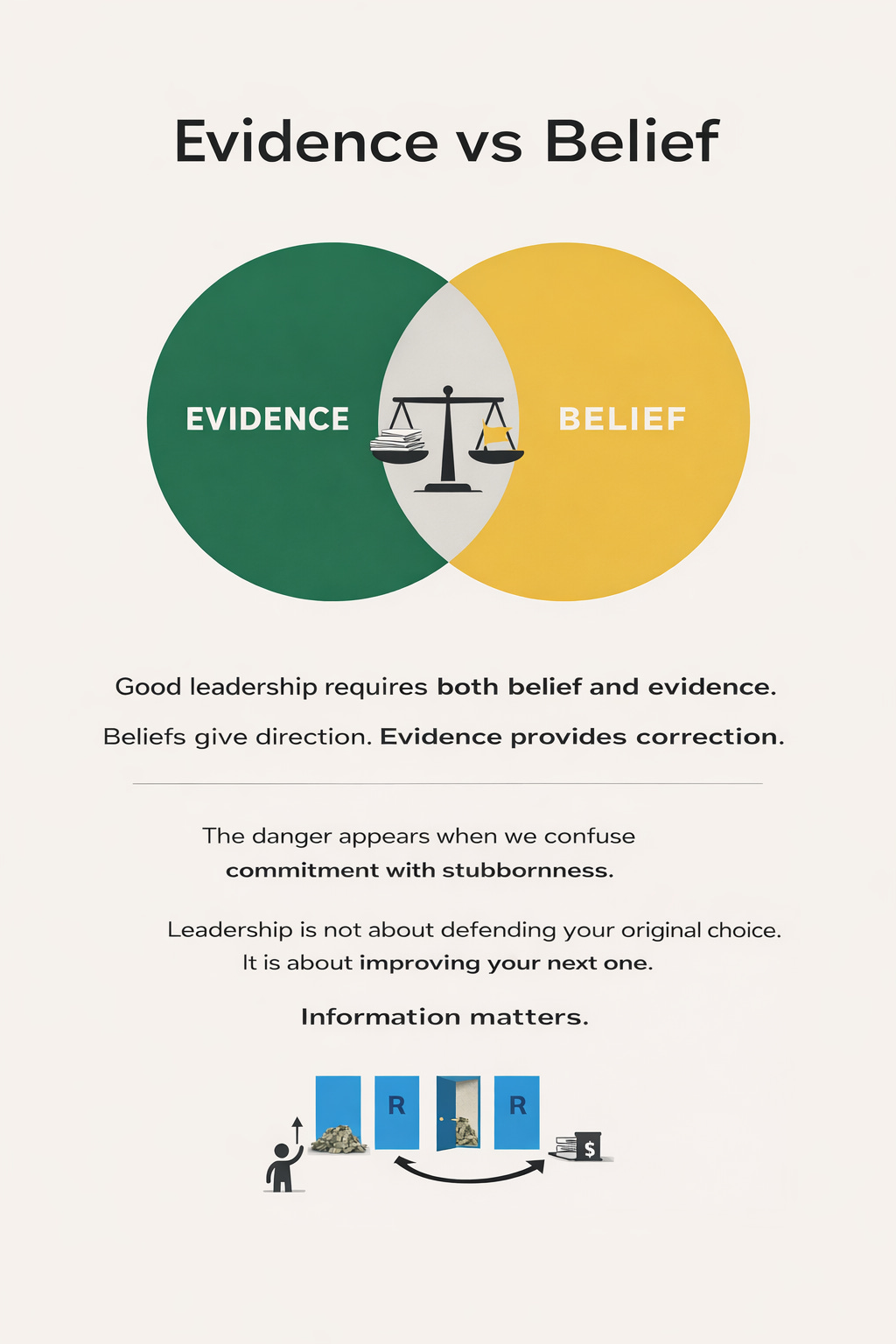
Evidence vs Belief
Good leadership requires both belief and evidence.
Beliefs give direction. Evidence provides correction.
The danger appears when we confuse commitment with stubbornness.
Leadership is not about defending your original choice. It is about improving your next one.
The Monty Hall Problem illustrates this perfectly. When the host opens an empty door, nothing emotional changes. But everything mathematical does. The expected value of switching becomes higher than staying.
Again, Information matters.
Why Better Information Changes Everything
If I gave you two basketball recruits you have never heard of and asked who was better, your answer would be a guess. Fifty fifty is the best you can do.
Now add context.
One recruit barely plays at a small private school on a losing team. The other is a McDonald’s All American who won multiple state championships and is committed to the University of Maryland.
Your mindset changed instantly.
The decision did not change.
The information did.
This is the quiet advantage great leaders develop. They do not rely on instincts alone. They improve the quality of the inputs feeding their instincts.
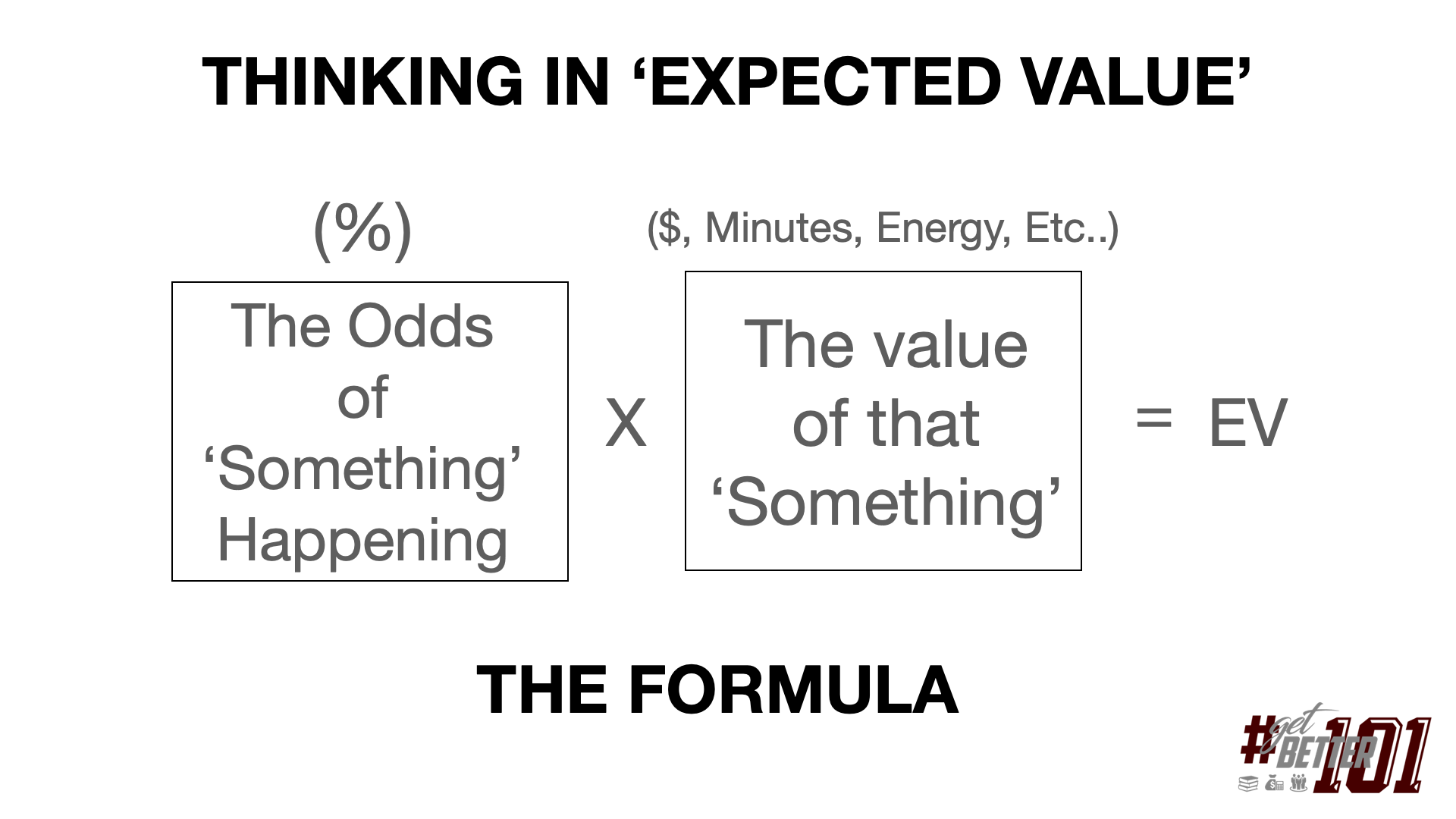
Expected Value Is the Filter
Expected value tells you when new information deserves to change your mind.
It does not ask whether something can go right or wrong. Everything can. It asks what happens on average over time.
Here’s another exercise:
Someone offers you a bet, and the bet is just to roll a dice.
You lose ten dollars on a one through five.
But win two hundred dollars on a roll of six.
Most people hesitate with this bet. They focus on how many losing outcomes there are versus winning outocmes.
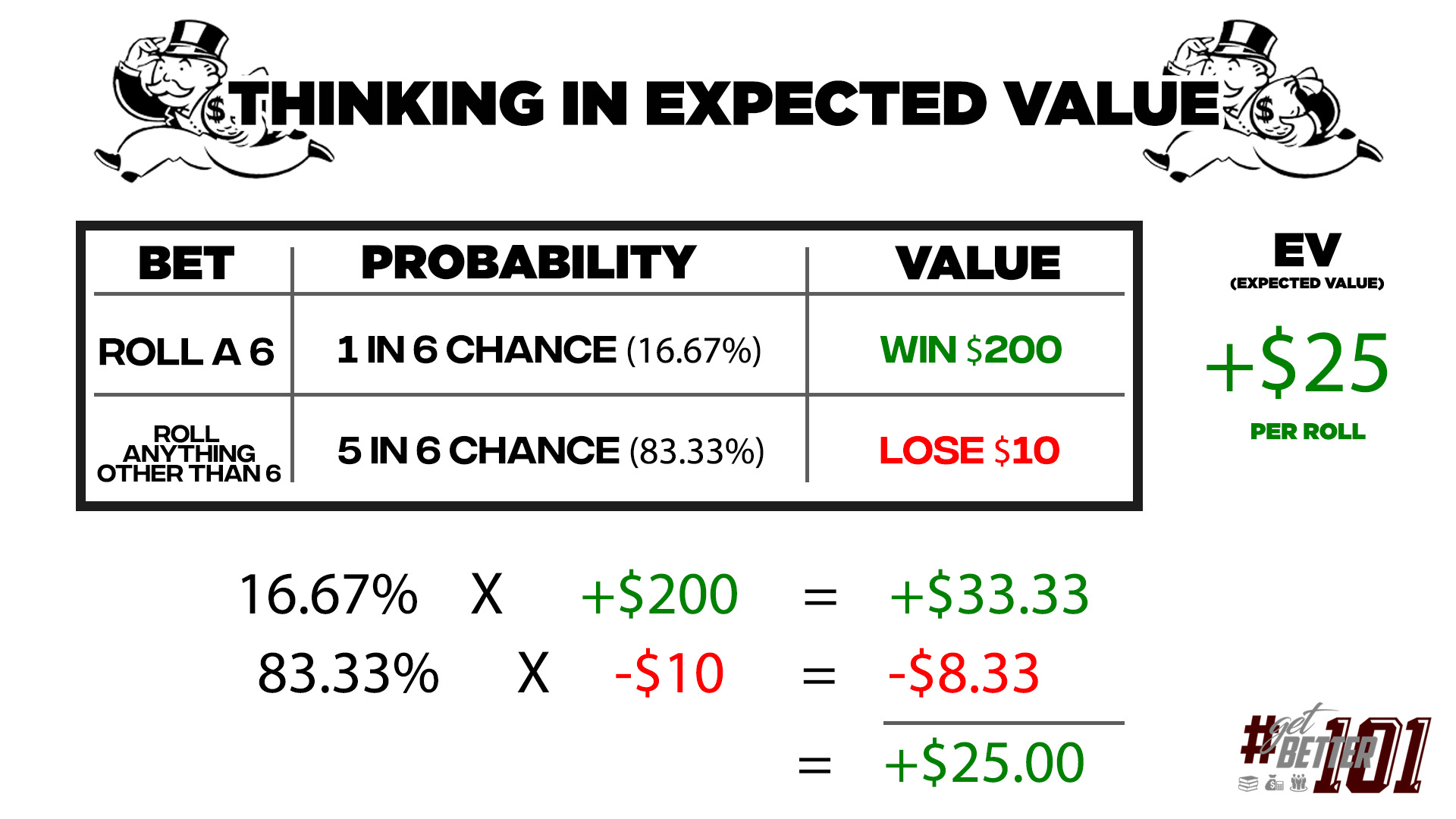
But the expected value is positive. On average, that decision earns money. It’s counterintuitive, but you should take that bet. Across enough rolls, despite how often you would lose, the one winner nets more than enough to cover those losses.
Leadership works the same way.
A tough conversation can go badly. Accountability can create friction. High standards can cause short term discomfort. But if the long term average outcome improves, the decision is worth making.
Improving decision quality is about increasing your chances of good outcomes, not guaranteeing them.
Why Emotions Try to Hijack Decisions
Casinos understand expected value better than anyone:
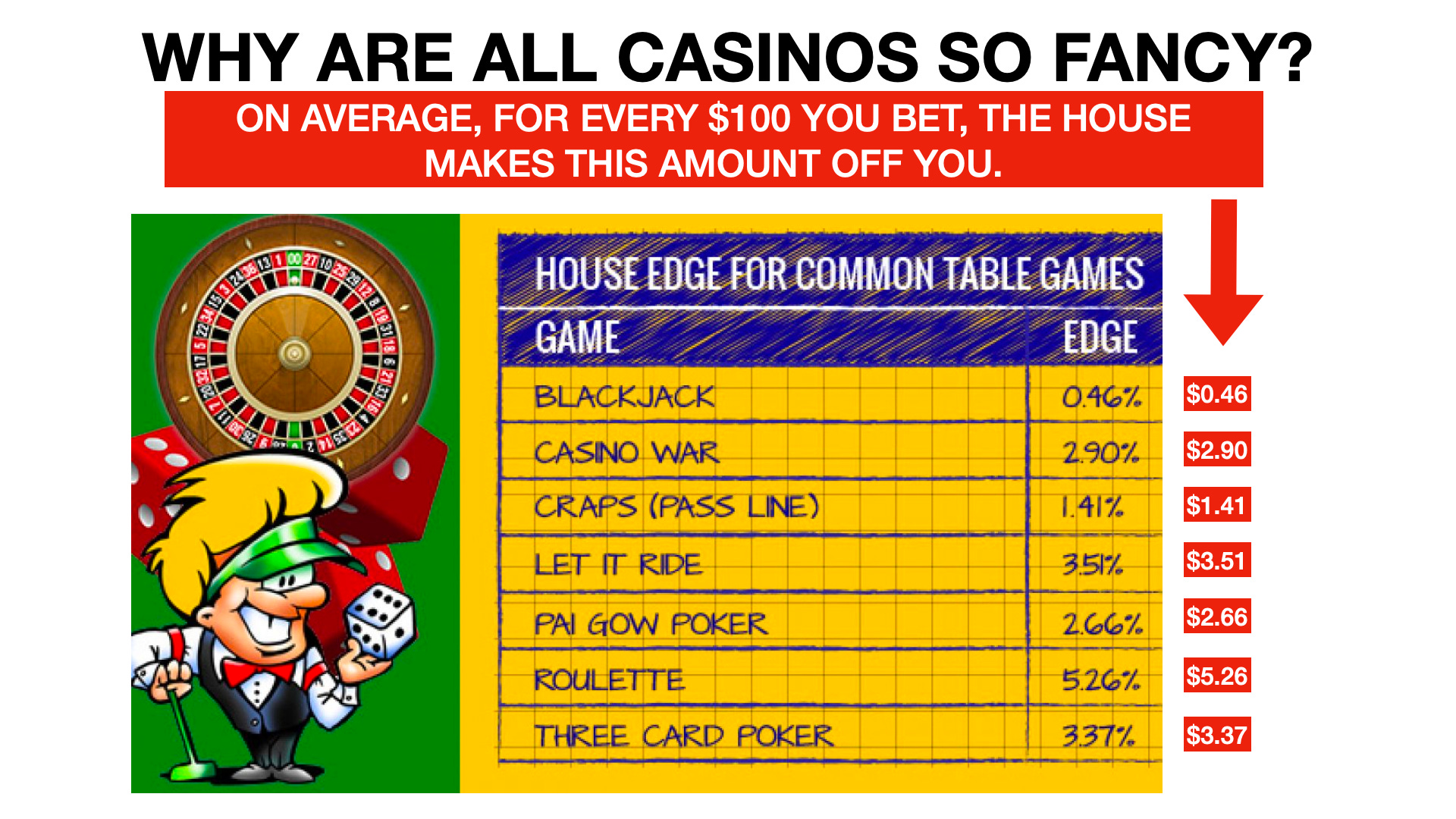
Every game is designed so the house wins a small percentage over time. Not because people are bad at math, but because people are emotional.
Casinos are loud, beautiful, and exciting because they exploit a human shortcut called the affect heuristic. We let how something feels influence what we believe about it.
Luxury feels safe. Winning feels close. Bright lights make bad odds feel good.
Leadership decisions face the same trap.
A new opportunity feels exciting, so we assume it is good.
A popular idea feels right, so we follow it.
Short term praise clouds long term math.
Emotion is fast. Evidence is patient.
Great leaders learn to slow down long enough to let expected value speak louder than feelings.
Decisions Become Muscle Memory
Good decisions are not heroic moments. They are habits.
When you repeatedly choose positive expected value actions, they become automatic. Telling the truth. Doing the work. Repeating fundamentals. Investing in people.
Negative expected value choices feel tempting because they are easy. Avoidance. Comparison. Shortcuts. Seeking approval.
Over time, one compounds upward. The other compounds downward.
Changing your mind early is cheaper than changing your results later.
Me vs We
Leadership adds another layer.
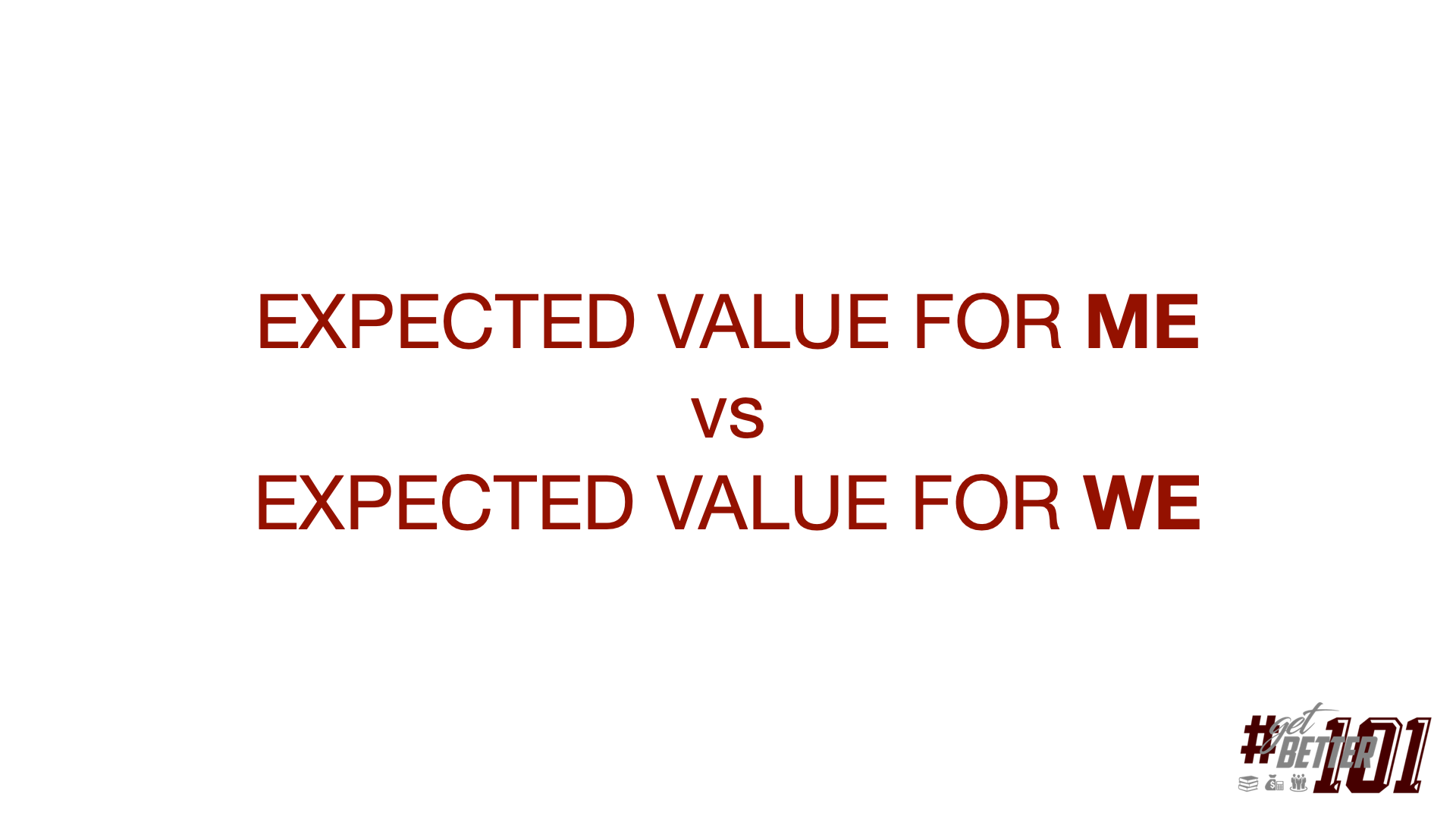
Every decision has an expected value for you and an expected value for the people you lead. The two are often different.
The easy choice usually benefits the individual.
The hard choice usually benefits the group.
Great leaders consistently choose decisions where the expected value for the team is higher, even when it costs them personally.
That is responsibility.
Two Ways to Increase the Expected Value of Your Life
Choose hard problems.
The more difficult the problems you solve, the faster you grow. Growth compounds. Comfort does not.
Have the tough conversations.
Hold your players and staff to championship standards.
Be accountable to your words and actions.
Be selfless.
What is right is not always popular. What is popular is not always right.
The hard way is the right way.
Reduce reliance on luck.
You cannot control outcomes, but you can raise probabilities. Better preparation. Better habits. Better effort.
Focus on the work. Stack the odds. Let results follow.
Don’t Gamble With Your Life
Life is not a casino unless you treat it like one.
Every day you are placing bets with your time, your energy, and your influence. You will not win every hand.
But you can choose whether the math of your life is working for you or against you. And over time, small edges become big outcomes.
Change your mind when the information earns it.
Let evidence update your beliefs.
And remember,
Keep Evolving!